

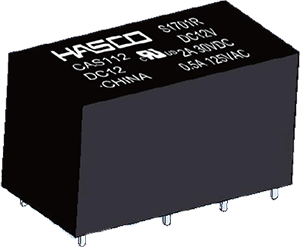
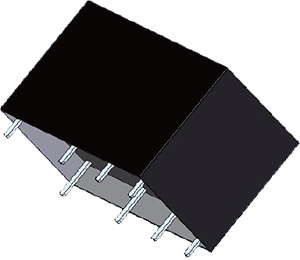
Features
- Sensitive type and standard type are available
- Fully Sealed

File No.:E75887

Contact Ratings
| Contact Arrangement | 2C |
|---|---|
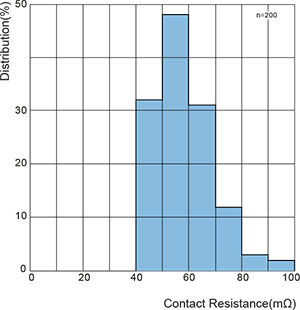
| Contact Resistance | ≤100mΩ(100mA 6VDC) |
| Contact Material | SiIver AIIoy, Gold FLash |
| Contact Rating (Resistive) | 2A/30VDC, 2.5A/12VDC 0.5A/125VAC, 0.6A/120VAC |
| Minimum Load | 1mA/10mV(Reference Value) |
| Max. Switching Voltage | 240VAC/120VDC |
| Max. Switching Current | 2A |
| Max. Switching Power | 72VA/60W |
| Mechanical Life | 1×10⁸ operations |
| Electrical Life | See more details at “safety approval ratings” |
Characteristics
| Insulation Resistance | 1000MΩ (at 500VDC) | |
|---|---|---|
| Dielectric Strength | Between coil & contacts | 1000VAC 1min |
| Between open contacts | 1000VAC 1min | |
| Operate time (at nomi. volt.) | ≤7ms | |
| Release time (at nomi. volt.) | ≤5ms | |
| Humidity | 98% RH | |
| Operation temperature | -40°C~+85°C | |
| UL Class B | Insulation System Class B | |
| Shock Resistance | Functional | 100m/s2 |
| Destructive | 980m/s2 | |
| Vibration resistance | 10Hz ~ 55Hz 1.5mm DA | |
| Unit weight | Approx. 5g | |
| Construction | Sealed Type | |
Notes:
1) The data shown above are initial values.
2) Please find coil temperature curve in the characteristic curves.
Ordering Information
| CAS112/CS212 | DC12 – | XXXX |
|---|---|---|
| Model: CAS112=Standard type CS212=Sensitive type | Coil Voltage | Customer Code |
Coil Data at 25°C
Standard Type
| Nominal Voltage VDC | Operate Voltage (Max.) VDC | Release Voltage (Min.) VDC | *Max. Allowable Voltage VDC | Coil Resistance Ω±10% |
|---|---|---|---|---|
| 5 | 3.75 | 0.25 | 7.0 | 45 |
| 6 | 4.50 | 0.30 | 8.4 | 66 |
| 9 | 6.75 | 0.45 | 12.3 | 140 |
| 12 | 9.00 | 0.60 | 17.4 | 280 |
| 24 | 18.00 | 1.20 | 34.0 | 1070 |
| 48 | 36.00 | 2.40 | 64.9 | 3900 |
Sensitive Type
| Nominal Voltage VDC | Operate Voltage (Max.) VDC | Release Voltage (Min.) VDC | *Max. Allowable Voltage VDC | Coil Resistance Ω±10% |
|---|---|---|---|---|
| 5 | 3.75 | 0.25 | 12.5 | 167 |
| 6 | 4.50 | 0.30 | 15.0 | 240 |
| 9 | 6.75 | 0.45 | 22.5 | 540 |
| 12 | 9.00 | 0.60 | 30.0 | 960 |
| 18 | 13.50 | 0.90 | 40.0 | 1620 |
| 24 | 18.00 | 1.20 | 52.9 | 2880 |
| 48 | 36.00 | 2.40 | 84.9 | 7680 |
Note:”*Max Allowable Voltage”: The relay coil can endure max allowable voltage for a short period time only.
Coil
| Coil Power | Standard Type:500mW ~ 590mW |
|---|---|
| Sensitive Type:150mW ~ 300mW |
Safety Approval Ratings
| UL&CUL | N.O./N.C.:2A 30VDC, 6×10³OPS N.O./N.C.:2.5A 12VDC, 6×10³OPS N.O./N.C.:0.5A 125VAC, G.P., 6×10³OPS N.O./N.C.:0.6A 120VAC, G.P., 6×10³OPS |
|---|
NOTES:
1. All values without specified temperature are at 25°C.
2. The above lists the typical loads only. Other loads may be available upon request.
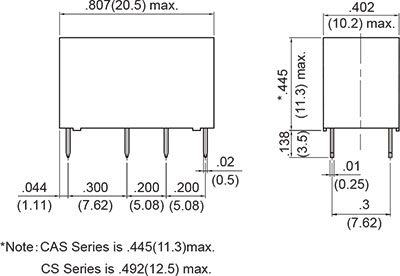
OUTLINE DIMENSIONS, WIRING DIAGRAM AND PC BOARD LAYOUT. Unit: inch(mm)
Outline Dimensions
Wiring Diagram
(Bottom view)

PCB Layout
(Bottom view)

* The tolerance without indicating for PCB layout is always ±0.1mm.
Unless otherwise specified tolerances are:
| ≤1mm | >1mm and ≤5mm | >5mm |
| ±0.2mm | ±0.3mm | ±0.4mm |
CHARACTERISTIC CURVES
MAXIMUM SWITCHING POWER

LIFE CURVE

CONTACT RESISTANCE
PACKAGING SPECIFICATION
| PAPER BOX | OUTER CARTON | OUTER CARTON SIZE |
|---|---|---|
| 1000PCS | 4000PCS | L495mm*W315mm*H245mm |
APPLICATION GUIDELINES
Automatic Wave Soldering
* Wave solder is the optimum method for soldering.
* Adjust the level of solder so that it does not overflow onto the top of the PC board.
* Unless otherwise specified, solder under the following conditions depending on the type of relay.
| Preheat time 20°C-100°C | Rising slope 20°C-120°C | Decreasing slope Peak-150°C | Slodering temperature 255°C-265°C |
|---|---|---|---|
| 90±5 seconds | <3°C/s | <4°C/s | 3~5s |
Hand Soldering
* Keep the tip of the soldering iron clean.
| Solder lron | 30W or 60W |
|---|---|
| lron Tip Temperature | Approx. 350°C 662°F |
| Solder Time | Within approx. 3 seconds |
* Immediate air cooling is recommended to prevent deterioration of the relay and surrounding parts due to soldering heat.
* Although the sealed type relay can be cleaned, avoid immersing the relay into cold liquid
(such as washing solvent) immediately after soldering. Doing so may deteriorate the sealing performance.
Discard the dropped product
